Private PSA blood test



4.84 out of 5 based on patient reviews
If you've reached an age where prostate health is on your mind, or a family diagnosis has made you want to keep an eye on things, a PSA test is a simple way to start. PSACheck is a private, at-home PSA blood test that helps you understand more about your prostate health, taken whenever suits you.
The test measures the level of prostate-specific antigen (PSA) in your blood. A raised PSA level can sometimes be associated with prostate cancer, but it can also be caused by non-cancerous conditions, including an enlarged prostate, prostatitis or a urine infection.
A PSA test cannot diagnose prostate cancer or confirm that you do not have it. If your PSA result is raised, further tests and assessment by a healthcare professional may be needed.
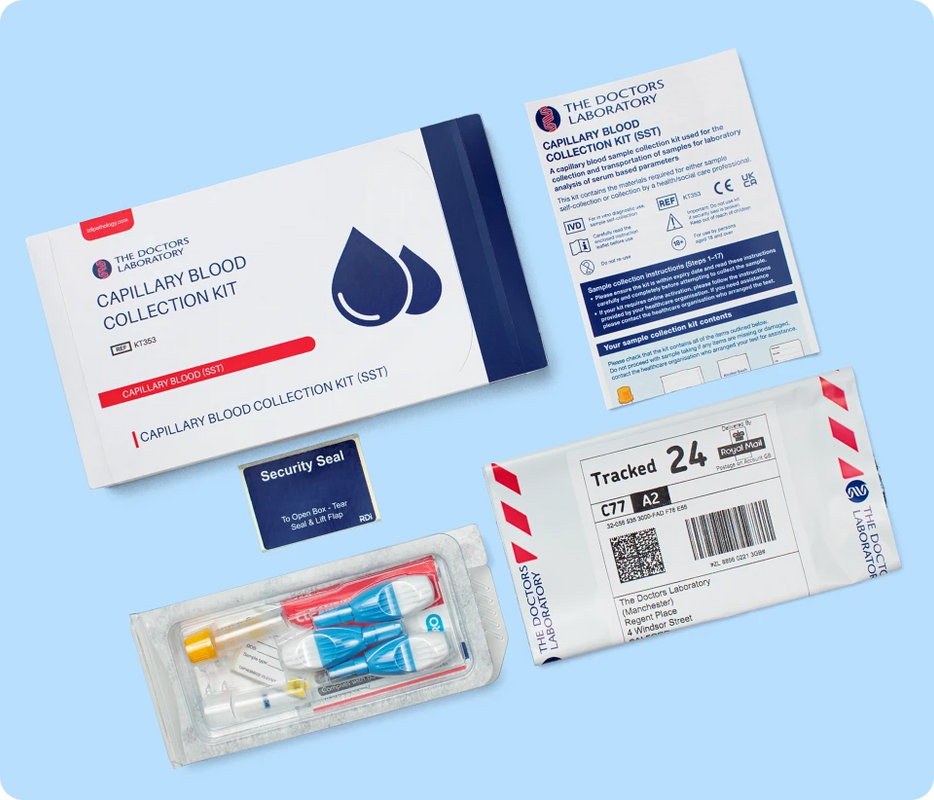
- Simple at-home blood collection kit: Collect a small blood sample using a finger-prick test and return it to the laboratory in the packaging provided.
- No doctor’s appointment needed to collect your sample: Test from home with ease.Take the test privately at home, at a time that suits you.
- Expert clinical support: Your results are reviewed within Check4Cancer’s clinically led pathway, with clear guidance about what they mean and what to do next.
- Fast, confidential results: Your sample is analysed in a UKAS-accredited laboratory operating to ISO 15189 standards, with secure results available within five working days of the laboratory receiving your sample.


Request callback
Please ensure you have read and agree to our privacy policy before submitting your request.

Why consider a PSA blood test?
Prostate cancer is the most common cancer in men in the UK, with around 1 in 8 men developing it during their lifetime. Risk increases with age and is higher among Black men and men with a family history of prostate cancer. Prostate cancer often causes no symptoms in its early stages. A PSA blood test may provide an early indication that something has changed in the prostate and that further investigation could be appropriate.
However, PSA testing also has limitations. It can produce a raised result when no cancer is present, miss some prostate cancers, and lead to further tests that ultimately prove unnecessary. Deciding whether to have a PSA test is a personal choice, and it is important to understand both the potential benefits and limitations.
PSACheck measures total PSA and, for certain raised results, free PSA and the Free-to-Total PSA ratio. This can provide additional information to support the clinical interpretation of an elevated PSA result, but it does not diagnose or rule out prostate cancer.
Who might consider a PSA test?
Check4Cancer offers PSACheck to men aged 40 and over, as current evidence does not show that men under 40 benefit from PSA testing. Your age, ethnicity, family history, general health and personal preferences should all be considered when deciding whether testing is appropriate.
If you are 50 and over:
Prostate cancer risk increases with age.
If you are a black man aged 45 and over:
Black men have a higher lifetime risk of developing prostate cancer and may develop it at a younger age.
If you have a family history of prostate cancer:
Your risk is higher if your father or brother has had prostate cancer, particularly if they were diagnosed before age 60.
If you simply want to understand your PSA level:
Testing may help identify a raised PSA result that should be discussed with a healthcare professional.
Your risk of prostate cancer increases with age. Having one or more risk factors does not mean that you will develop prostate cancer. Likewise, having no known risk factors does not mean that prostate cancer can be completely ruled out.

Do you have prostate symptoms?
PSACheck is intended as a screening test for men without symptoms. It should not be used as a substitute for seeing a doctor if you have symptoms or concerns about your prostate health.
Most prostate symptoms turn out to be something harmless, but they're always worth getting checked. Speak to your GP as soon as possible if you experience symptoms such as:
- difficulty starting to urinate
- a weak or interrupted urine flow
- needing to urinate more frequently, particularly at night
- a sudden urge to urinate
- pain when urinating
- blood in your urine or semen
- unexplained pain in your lower abdomen, pelvis or back
These symptoms are often caused by non-cancerous prostate problems, including benign prostatic hyperplasia (BPH), but they should still be assessed by a healthcare professional. If you have symptoms, don't delay seeing your GP while waiting for a home test.
Why choose Check4Cancer for your PSA blood test?
Not all home PSA tests provide the same level of laboratory analysis, clinical review or follow-up support. PSACheck combines convenient home sample collection with clinically led results and an onward referral pathway.

Cancer screening services developed and supported by cancer specialists.
Total PSA measured for every suitable sample.
Free PSA and a calculated Free-to-Total PSA ratio provided when the total PSA result falls within the specified reflex range.
Samples analysed in UKAS-accredited laboratories operating to ISO 15189 standards.
Kits assessed for usability and sample stability in accordance with the applicable UKCA requirements.
Kits normally dispatched within one working day.
Secure results normally provided within five working days of the laboratory receiving your sample.
Abnormal results communicated by telephone by a member of the clinical team, giving you an opportunity to ask questions.
Guidance and onward referral options provided where further medical assessment is recommended, including referral to an appropriate healthcare professional or advice on contacting your GP.

The benefits of an at-home PSA test
Convenience and privacy
The home collection kit allows you to provide a small blood sample without attending a clinic or waiting for an appointment. Clear instructions explain how to collect and return your sample safely.
Clinically reviewed results
PSACheck is more than a home test kit. Your laboratory result is considered within a clinically led pathway, with guidance to help you understand what the result means and whether any follow-up is recommended.
Support is your PSA is raised
A raised PSA result can be unsettling, but it doesn't mean you have prostate cancer, and you won't be left to interpret it alone. If your result is raised, a member of our clinical team will contact you to explain the result, answer your questions and discuss appropriate next steps.
FAQs
What is a PSA Test?
Is PSA a good measure for diagnosing prostate cancer?
What are total and free PSA levels?
What can cause a raised PSA result?
How accurate is PSACheck?
Is the Free-to-Total PSA ratio included in all results?
No. The Free-to-Total PSA ratio is only provided when the total PSA result falls between 4.00 µg/L and 10.00 µg/L. This additional measurement can provide more context for certain raised PSA results and support further clinical decision-making. It cannot diagnose or rule out prostate cancer.
Can a PSA test detect prostate cancer?
A PSA test cannot directly detect or diagnose prostate cancer. It can identify a raised PSA level that may indicate a change in the prostate and the need for further medical assessment. Some men with prostate cancer have a PSA result within the expected range, while many men with a raised PSA do not have cancer. A healthcare professional may therefore consider your PSA result alongside your age, ethnicity, family history, symptoms, medical history and previous results. If further investigation is needed, this may include a repeat blood test, prostate examination, urine test, MRI scan or biopsy.
Will the test tell me about my prostate health?
The test will tell you the measured level of PSA in your blood at the time your sample was taken. This can provide useful information about your prostate health, particularly if the result is raised or if it is compared with previous PSA results. It cannot provide a complete assessment of your prostate, identify the reason for a raised PSA or diagnose a specific condition. An enlarged prostate, prostatitis, a urine infection and prostate cancer can all affect PSA levels. If you have symptoms, a raised result or ongoing concerns, you should speak to a GP or another healthcare professional. They may recommend a prostate examination or additional tests.
How often should I have a PSA test?
There is no single testing interval that is right for everyone. How often you should have a PSA test depends on your age, ethnicity, family history, medical history, previous PSA levels and overall risk of prostate cancer. Testing too frequently can lead to unnecessary concern and further investigation, while changes over time may sometimes be clinically useful. Discuss the most appropriate interval with a healthcare professional, particularly if you have previously had a raised result or are at higher risk. Do not use repeated home testing as a substitute for medical assessment of a raised result or prostate symptoms.
Will the test tell me if I am at higher risk of developing prostate cancer?
No. A PSA test measures your current PSA level; it is not a genetic test or comprehensive prostate cancer risk assessment. Your wider risk is influenced by factors including: your age Black ethnicity a father or brother with prostate cancer relatives diagnosed at a younger age certain inherited genetic changes, including BRCA gene variants your personal and medical history A PSA result may contribute to an assessment of your prostate health, but it cannot predict whether you will develop prostate cancer in the future.
What happens if my PSA result is raised?
A raised PSA result does not mean you have prostate cancer. If your result is raised, a member of Check4Cancer’s clinical team will contact you to explain the result and discuss the recommended next steps. Depending on your PSA level and individual circumstances, you may be advised to: repeat the PSA blood test speak to your GP have a urine test to check for infection undergo a prostate examination see a private urologist or be referred through the NHS have further tests such as an MRI scan undergo a prostate biopsy if a specialist considers it necessary The onward pathway is important because further clinical assessment - not the PSA result alone - is needed to establish why your PSA is raised.
Does a normal PSA result rule out prostate cancer?
No. A result within the expected range may be reassuring, but it cannot completely rule out prostate cancer. You should contact your GP if you develop symptoms, remain concerned about your prostate health or have significant risk factors, even if your PSA result is not raised.
How to use our PSA blood test at home
Screening for prostate cancer at home is fast and straightforward. Here’s how it works:

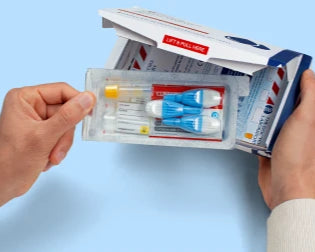
2. Collect your sample: Use the finger-prick blood test kit provided.

3. Secure the sample: Package it safely in the sealed container provided.

4. Package and return: Use the prepaid, discreet packaging to send your sample to our certified laboratory.

5. Get your results: Receive your results within five working days via a secure delivery system.
This process is private, easy to follow, and designed to give you clarity and peace of mind.
Excellent
4.84 out of 5 based on 5965 patient reviews


Testimonials
"Great service, quick results and I feel reassured. Thank you."
JC
Private PSA blood test
"From booking the tests to receiving my results the whole process has been smooth and slick. Excellent communication and detailed information sent on receiving results. In all an excellent service, thank you."
TC
Private PSA blood test
"The overall service form start to finish was excellent. The speed in the delivery of the testing kit to the results being issued makes such a difference, thank you very much."
DL
Private PSA blood test
"Prompt and efficient service. Fast notification of results."
MB
Private PSA blood test
"Glad i had it checked as have heard a lot of talk online/news and via Talksport about getting checked. this prompted me to complete the sample."
CB
Private PSA blood test
"An excellent way to monitor your health. "
DL
Private PSA blood test
"I noticed a new offering, Check4Cancer, which provides a variety of cancer screening tests. Whilst I had no concerns regarding my health, nor any symptoms that concerned me, I am over 50 so opted to have the prostate check…… My key message to everyone is access any preventative treatments/benefit provisions that are available to you. I displayed no symptoms, so I’m just so glad that I went with my instincts and accessed this benefit. That decision has probably saved my life!"
GW
Private PSA blood test

Professor Richard Hindley
Clinical Advisor for Prostate Cancer
Consultant Urologist at Hampshire Hospitals. Visiting Professor at the department of Health & Wellbeing at the University of Winchester Richard Hindley is a Consultant Urologist at Hampshire Hospitals and was appointed in 2014. In 2017 he was awarded a visiting Professor position working with the Department of Health and Wellbeing at the University of Winchester. This was in recognition of his growing prostate research portfolio which includes collaborating with other units including UCLH and the University of Oxford. He was privileged to be involved with the PROMIS and PRECISION trials, which have changed forever the diagnostic pathway for men with suspected prostate cancer. He has publications in both the Lancet at the NEJM. His interests relate not only to prostate cancer diagnostics but also focal therapy as a treatment option for men with intermediate risk prostate cancer, as well as minimally invasive treatments for benign prostatic obstruction and men’s health issues in general.
Find out more

